Why Do My Drumsticks Keep Slipping? 3 Beginner Grip Fixes
If a stick slides forwards or leaves your hand, weak grip strength is not necessarily the cause. Squeezing continuously can stop the rebound and tire the wrist and forearm. Begin near the stick's balance point, make a light pivot with the thumb and index finger, and let the remaining fingers guide the returning stick.
주요 기능과 선택 항목
- Use roughly a quarter to a third of the stick length from the butt as a starting area, then find the easiest rebound
- Do not pinch with only the thumb and index finger; keep the middle, ring, and little fingers in light contact
- Avoid squeezing simply to prevent a drop, and reset your position and tension every eight strokes
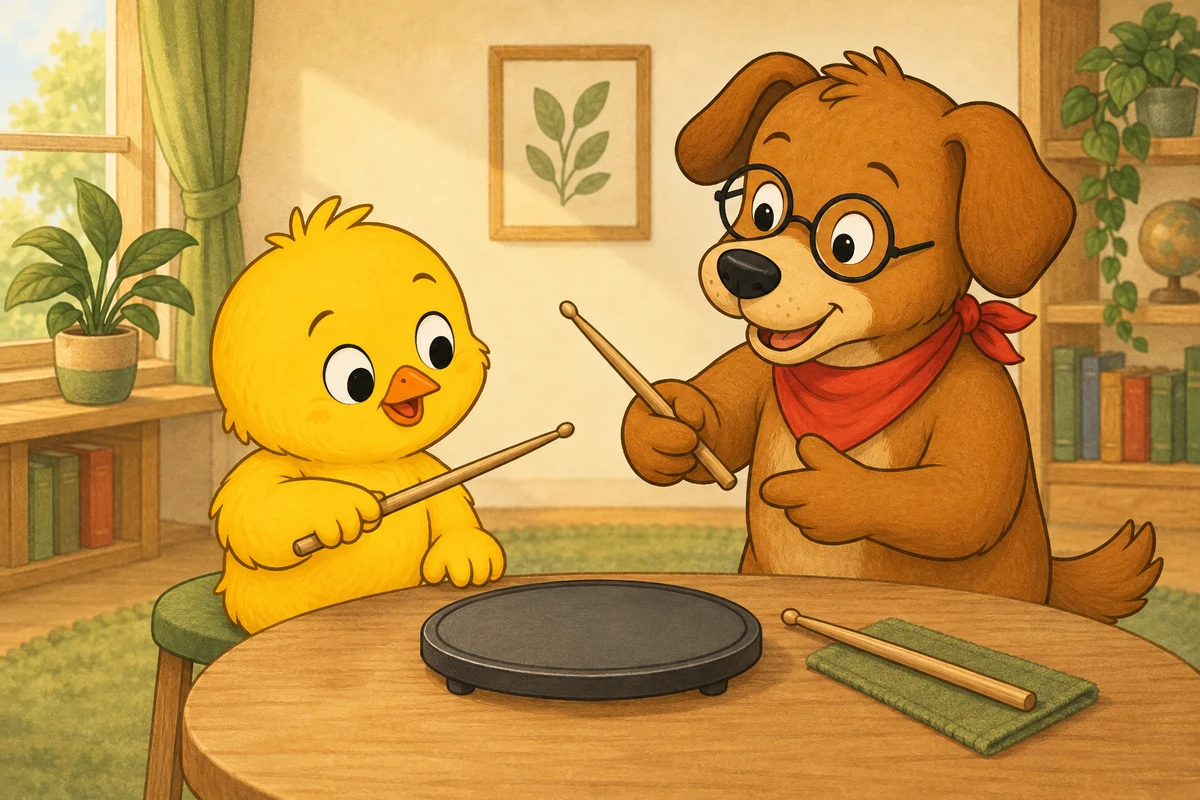
Begin near the balance point
Start roughly a quarter to a third of the stick length from the butt end. For this lesson, use a matched-grip starting point with the thumb pad and first joint area of the index finger supporting that area lightly. Make one low stroke on a practice pad and compare small changes in holding position while checking whether the stick returns naturally. You are looking for a useful rebound pivot, not the static centre of mass found by balancing the stick horizontally on one finger. Hand size and playing style change the most comfortable position, so the fraction is a guide rather than a fixed measurement. Avoid hiding the entire butt inside the hand or gripping at the very end. Choose a position from which one stroke can return without a forced lift.
Guide the rebound with the back three fingers
When only the thumb and index finger pinch the stick, the middle, ring, and little fingers may open completely and lose the stick as it rebounds. Keep those three fingers in light contact without pressing the shaft into the palm. Strike a practice pad or a snare at a safe volume once and feel the tip return into the fingers. The aim is neither to squeeze away the bounce nor to open every finger and let the stick fly freely. Guide the returning stick towards the next stroke. A small amount of rotation or movement can be normal, so complete immobility is not the target.
Film eight strokes and identify the moment before the slip
Play eight right-hand strokes and eight left-hand strokes at 60 BPM, one stroke per click, and film a short front or side view. If the stick creeps towards the tip, check whether the back fingers open fully on every stroke. If only one hand keeps rotating, compare the line of the stick with the forearm and the starting heights of the two hands. Dry sweaty hands and shafts, and inspect each stick for cracks, splinters, or a heavily soiled grip surface. Work in sets of only eight strokes and change one variable at a time: holding point, back-finger contact, or shoulder and forearm tension.
Pio: Should I squeeze the sticks all the time so I cannot drop them?
Dock-sensei: Continuous squeezing stops the rebound and can make the movement less reliable as you tire. Make a light pivot, keep the back three fingers in contact, and guide the stick when it returns. Eight careful strokes are enough for the first check.
Today's eight-minute stick-control session
- 1 minute: inspect both sticks for cracks or splinters, then dry the hands and grip area
- 2 minutes: hold lightly roughly a quarter to a third from the butt, make one low pad stroke, and compare the natural return in both hands
- 2 minutes: at 60 BPM, play three sets of eight right-hand and eight left-hand strokes while checking that the back fingers do not open completely
- 3 minutes: at 50 BPM, count 1-and-2-and-3-and-4-and and alternate for four bars, resetting position and tension after each bar
Review and references
Last content review:
The holding position and back-finger support were checked against manufacturer guidance. The exercise now tests rebound with a low stroke rather than locating a static centre of mass by horizontal balancing.
- Drumming Fundamentals: Holding the Sticks — Yamaha Corporation
References support the editorial review. They do not provide an individual diagnosis or guarantee compatibility with every instrument or model.
자주 묻는 질문
Must a drumstick stay completely still in my hand?
No. A little rotation or movement can happen while playing. Recheck the pivot and back fingers if the stick travels a large distance within a few strokes or needs constant manual resetting.
Does dropping a stick always mean my grip is too loose?
No. The holding point, open back fingers, stroke angle, unequal stick heights, sweat, and stick condition can all contribute. Check one cause at a time instead of maintaining a hard squeeze.
Must the fulcrum always be between the thumb and index finger?
The thumb-and-index version is an accessible starting point. Some approaches centre the support between the thumb and middle finger. In either case, use the remaining fingers and prioritise painless rebound control.
Should I learn traditional grip first?
It is not required. Matched grip gives a beginner the same basic shape in both hands and makes comparison easier. Learn traditional grip separately if your music or teacher calls for it.
Can I use grip tape or stick wax?
It can be an option after checking the basic holding point and finger movement. An accessory can also hide excessive tension or a poor stroke path, so film a short set first and follow the product instructions, including any skin precautions.
Should I continue if my fingers or wrist hurt?
No. Stop for sharp pain, numbness, or discomfort that remains in a joint or forearm. Reduce the stroke count and volume, rest, and ask a teacher to check the movement. Seek qualified medical advice if symptoms continue after rest.