Drum Beginner Roadmap: Your First Eighth-Note Groove
Your hands and feet do not need to become independent all at once. Learn rebound and a steady pulse, then layer the right hand, left hand, and right foot. Eighth-note grooves use many kick placements; this roadmap begins with one representative pattern using beats one and three.
Principais recursos e opções
- Hold the sticks without squeezing away the rebound
- Match quarter and eighth notes on a practice surface
- Layer hi-hat, snare, and kick one part at a time
Month one: play evenly
Use a fulcrum near the thumb and index finger while the other fingers stay in contact. Alternate right and left at 60 BPM, matching height and volume.
Month two: place hands and foot
Keep right-hand eighth notes and add the left hand on beats two and four. Kick placement can vary; for this first exercise, prepare the right foot on beats one and three. Practise each pair separately.
Month three: one representative groove
For this exercise, play eight hi-hat notes, snare on two and four, and kick on one and three. This is one of many eighth-note grooves, not the only definition. If it breaks, slow down and remove one part before rebuilding.
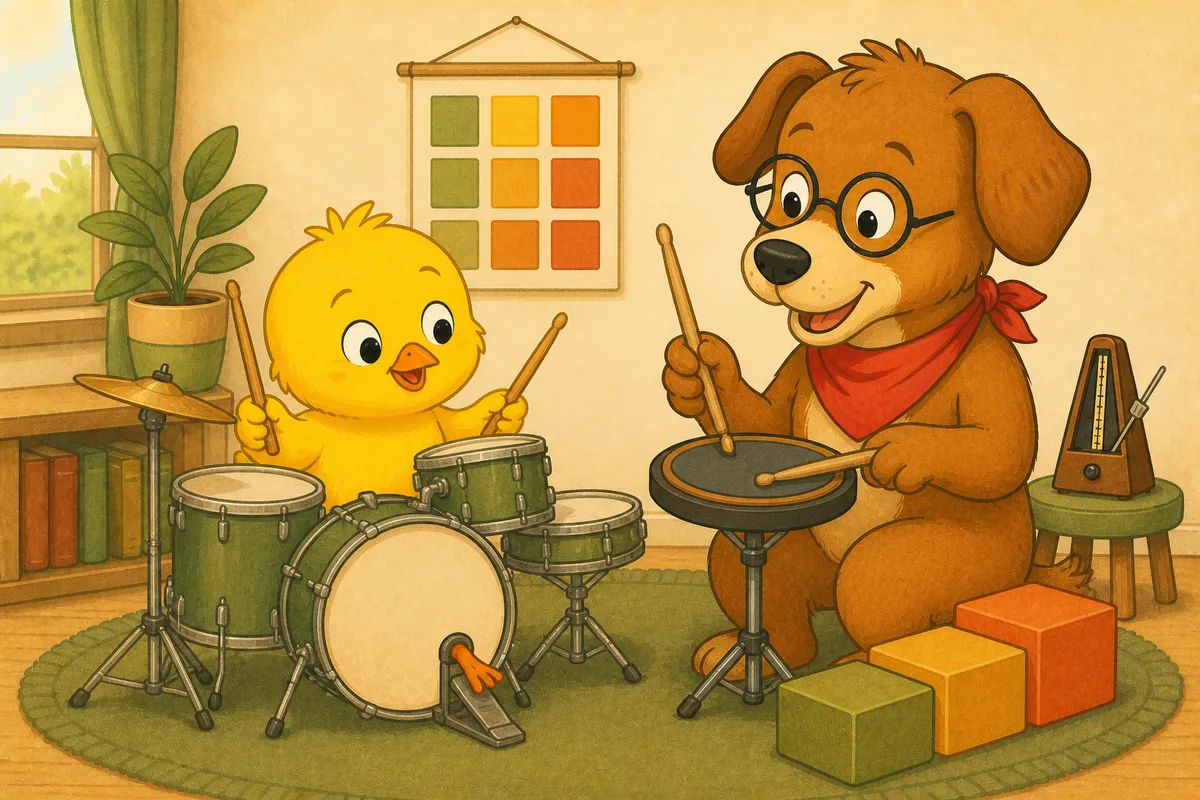
Pio: Can I begin without a drum kit at home?
Dock-sensei: Yes. Use a pad or cushion for the hands and lightly tap the floor for the foot. Check distance and dynamics gradually on a real kit.
Today's 15-minute session
- 3 minutes: grip and stick rebound
- 5 minutes: alternating quarter and eighth notes
- 7 minutes: add left hand, then right foot, to the right hand
Perguntas frequentes
Can I practise without a practice pad?
A cushion or folded towel can show the movement. Avoid striking a hard desk and choose a surface and volume that do not shock the wrist.
How can I reduce noise?
Pads, mesh-head electronic drums, low-height strokes, a vibration mat, and suitable practice hours all help.